
Bealtane - Season of the Fairy Host
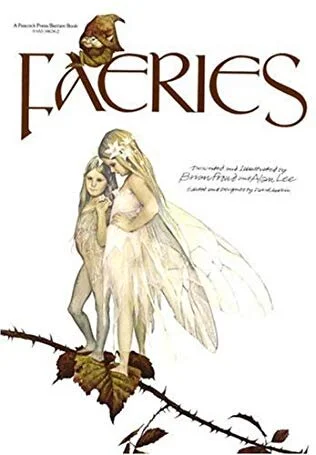
My whole childhood I wanted to see fairies. They never came to me - never in dreams, never waking, never anywhere except my mom’s big Brian Froud Fairy’s book (circa 1978), and Walt Disney. Of course, I heard about them a lot.
My mom raised us on a steady diet of Grimm’s and other folktales, and we have a family tradition of magic that has been passed down through the generations. Not doing magic per se but the kind of magic that inhabits every living thing in every day moments. It was common knowledge that freshly fallen snow had diamonds in it, the purpose of rain was to make rainbows, and every tiny flower, every tree and shrub, every blade of grass had a fairy living in it.
I grew up on top of an extinct volcano in a tiny town surrounded by miles of forest. The natural world was as much a part of my childhood as breathing. I had a strong impression early on, that the forest was alive in a way that was very similar to the way I was alive - and I figured that was because fairies, and I wanted to see them so badly! I would beg and plead in the bushes and hidden places that they show themselves to me, to no avail.
As I grew older, their refusal didn’t make me question their existence - it was more like, was I forsaken? Why wouldn’t they come? Why could other people see them? I remember many sessions of daydreaming, staring into the forest and giving myself headaches trying to lift up the purple haze curtain that drapes between our world and theirs. I would have given anything get through that curtain, but it never happened. Eventually I stopped trying and my belief settled into a kind of sullen acceptance. I was abandoned.
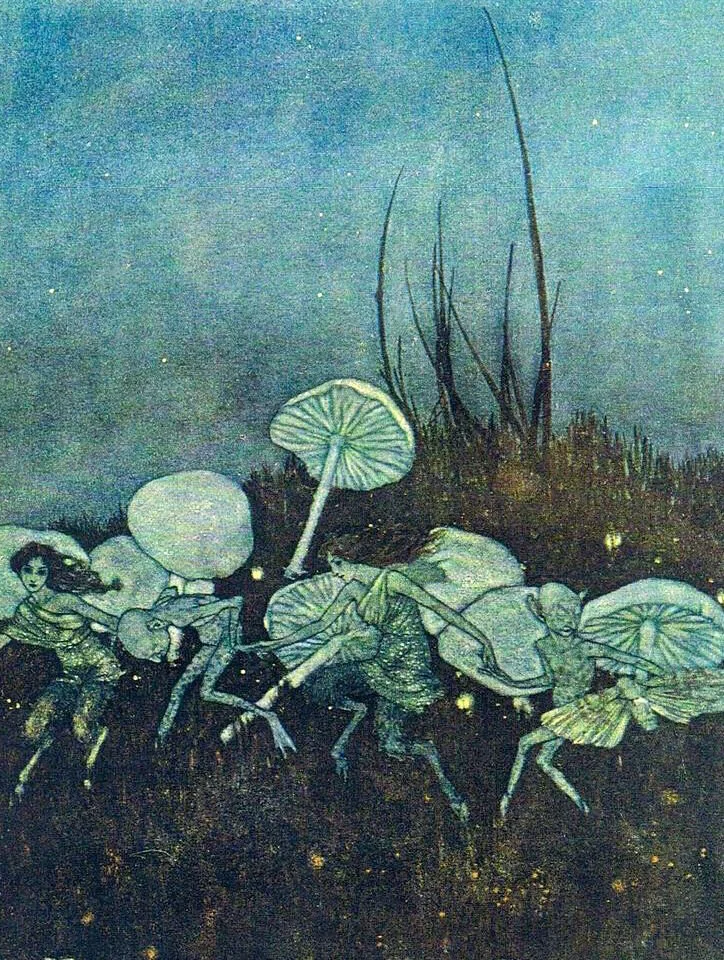
FAIRY HOST BY EDMOND DULAC
So imagine my surprise when, two nights before Beltaine last year I had my first dream about the fae-folk.
I was in a park at dusk with a lot of other people. There was a little girl there who was playing with a doll house, which was lit from within. The dolls, seen from afar, seemed to be moving about in the house on their own. Tiny, exquisite people in ball gowns and top hats. When I moved close to look they turned to plastic.
Presently, some kind of intoxication settled on me. I became disoriented mentally and had a hard time controlling my limbs. I made it out of the park but kept leaving my things behind me in a trail. I kept trying to go back a get them but somehow couldn’t. When out of the park, this beautiful young couple were hovering around me, trying to ‘help’. But, when I asked for a cell phone to call my husband, they refused. My spidey senses were alerted. I realized they were waiting for me to pass out.
In the dream I ‘knew’ that I was seeing fairies. It was a beautiful and warm summer’s eve in the park, full of people and twinkling lights - the perfect setting for such a sighting. I was astonished, captivated. But I was also in danger - that was clear.
On this continent at least, far removed from their homelands in the rolling green hills of Ireland, Scotland and the rocky crags of Iceland, and with the help of good ol’ Walt and the rewritten modern and less bloody versions of ancient folktales, it’s been easy to misunderstand fairies. Often portrayed as small, perhaps winged and easy to fool, they are seen in popular culture as harmlessly cheeky at times, benevolent godmothers at others, often mischievous but certainly not to be feared. They are ‘the good neighbours’, ‘the fair folk’, ‘the gentry’.
If you look deeper though, there are stories that echo my dream. Like the stories of Rip Van Winkle and Thomas the Rhymer, there’s a common theme; a mortal stumbles into a magical liminal space by mistake, is overtaken by some kind of intoxication via either food, drink or glamour, and falls asleep or becomes confused and lost. Apparently, one could also be whisked away after kissing a fair maiden in the forest who turns out to the Queen of the Fae, be taken to fairyland, and come back with gifts like prophesy and second sight, and tens, sometimes hundreds of years have passed.
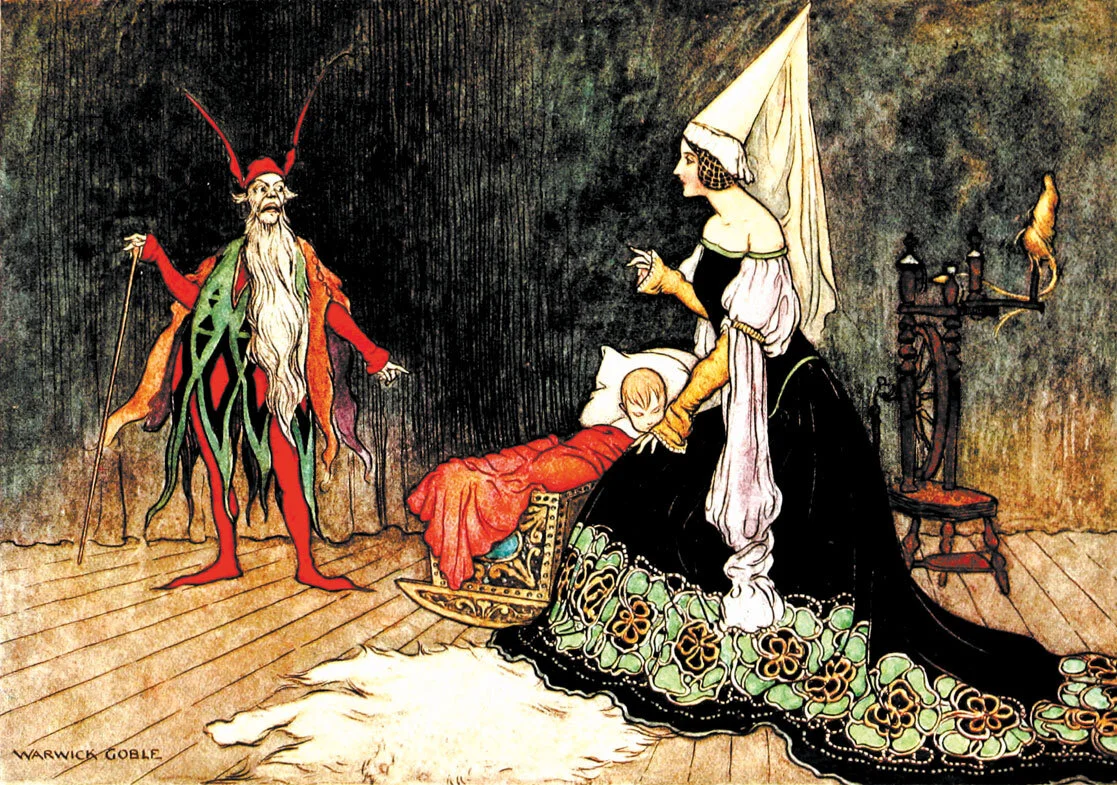
THE FAIRY BOOK BY WARWICK GOBLE
There’s a fun documentary, The Fairy Faith (2000) that tells of other, more malicious themes. One of my favourite stories from the film is told first hand by a man (a modern story, not a fairy-tale); he was standing on a hill and became entranced with a rainbow in a brook a little ways down, and then started to hear music, though he didn’t know where it was coming from. In this state, with the heat and the music, a thick reverie came upon him. He slowly came to notice his shadow laying across the hill in front of him and, directly at the edge of it were two little people with scissors, half-way into cutting his shadow right off of him. He yelled and they disappeared instantly, leaving him intact. Of course, we wonder what would have happened to him if they had gotten his shadow? Watch the film for free here ☞
You do see positive relations between us and the fae in some stories - even marriage, children, friendships. But you also read about people using iron railway ties to ward them off, keeping newborn babies close, planting certain herbs around livestock to keep them away, and leaving offerings to appease them. Most often in fact, old stories and superstition centre around protection from them.
At Beltaine, it is said that the veil between the worlds become thin. Similarly to Samhain when the dead walk the living earth, on Beltaine the Good Folk leave their forts in the hills and walk the land.
One of my teachers in our Irish lineage doesn’t take fairies lightly. According to her they’re just as often huge, like 7 feet tall or more, as they are tiny. They are not nature spirits or gods or angels but rather a powerful, supernatural race of a multitude of beings that lives along-side us, just on the other side of the curtain. Don’t mess with the Sidhe, she says, “they’re scary motherfuckers”.
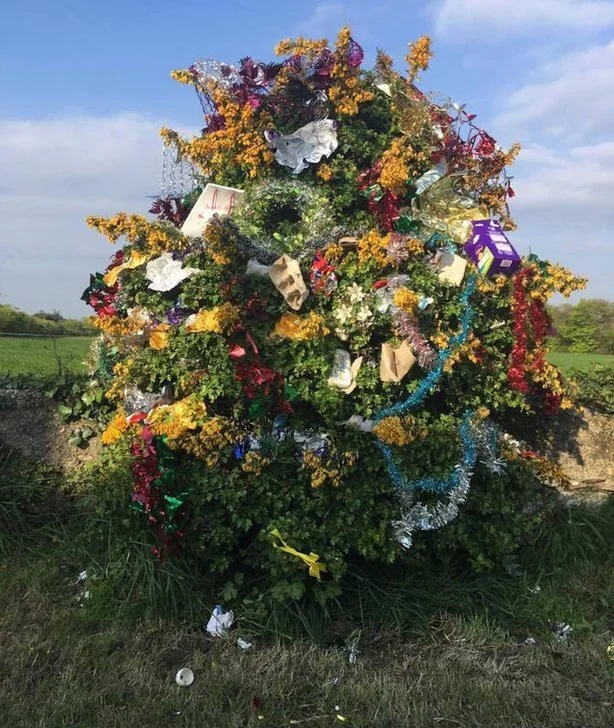
According to some folk traditions in England, the best way to protect your home and family from this tricksy host on Beltaine, is to ‘plant’ a May Bush outside the door to your house:
At Bealtaine and Samhain They are at their most powerful and in the past people would put up a May Bush near the front door to protect their homes from the travelling Daoine Sídhe. The bush itself consisted of a green branch of hawthorn or other tree stuck into the ground or tied to a pole and set in front of the homeplace… The May Bush was decorated by adults and children with traditional trimmings consisting of ribbons, coloured egg shells, bunches of yellow flowers and strips of coloured paper…The practice of decorating the bush is considered by some to be a survival of an ancient Bealtaine tradition welcoming the summer.
From The Ever Living Ones Blog
There’s a revival of this old tradition in county Wexford in England, that seems to be spreading!
This tradition has been brought back to prominence by husband and wife team Michael Fortune and Aileen Lambert from Folklore.ie, who like many people in Wexford, grew with the tradition first hand. Some years back they established The Wexford May Bush Festival as a slow-burning, grassroots event in a bid to spread the word throughout the county… The May Bush tradition is not just a Wexford tradition and is found in other counties in Leinster, East Munster and Ulster, with variants in Connaught; Wexford, however, is regarded as the stronghold of the tradition…
Traditionally, these May Bushes were erected in a prominent place in a bid to keep the ‘pisheogs’ away (ie the fairies), and like so many of our customs the May Bush was centred on the protection of the growing crops and the milk yield.
So in light of my dream, we’re totally doing this this year! I have already planted an impromptu one at the entrance to my property. There’s still plenty of time for you to take up the tradition too!
Happy Baltaine! Happy Spring. Watch your back.
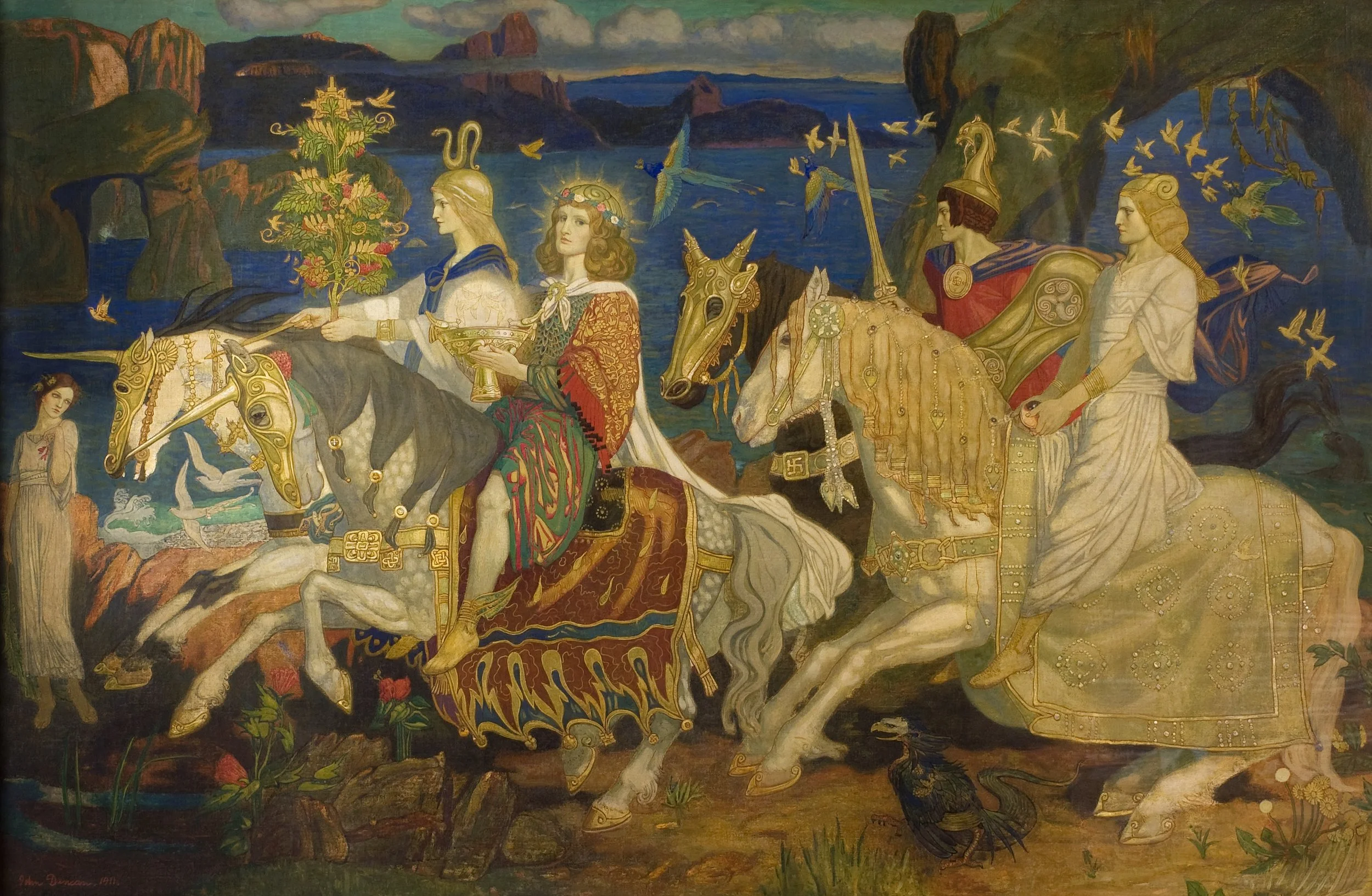
Featured image is “Riders of the Sidhe’ by John Duncan (1866-1945)